
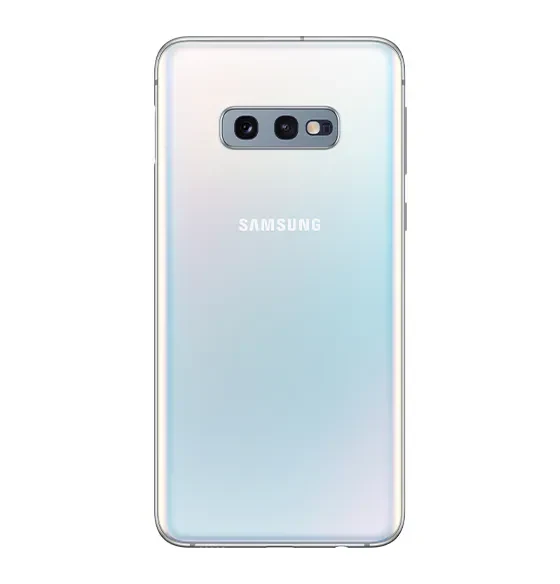
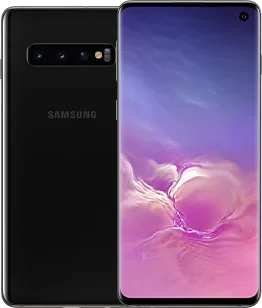
Samsung Galaxy S10

-
CPU: Octa-Core
-
RAM: 8GB
-
Storage: 128GB
-
Display: 6.1 inches
-
Camera: Main: 12+12+16MP, Front: 10MP
-
OS: Android
Specifcations
General
| Brand | Samsung |
| Model | Galaxy S10 |
| Device Type | Smartphone |
| Released | 01 March, 2019 |
| Status | Available |
| Price | : 88,999 (8GB+128GB) Official, 52,999 (8GB+128GB) Unofficial |
Software
| Operating System | Android |
| User Interface UI or user interface of a device is the look and feel of the on-screen menu system. How it works, its color scheme, how it responds to button presses, all of these things are part of the user interface. | Samsung One UI |
| OS Version | v9.0 |
Hardware
| RAM RAM (Random Access Memory) is a type of computer memory that can be accessed randomly, any byte of memory can be accessed without touching the preceding bytes that allows information to be stored and accessed quickly from random locations. RAM is the most common type of memory found in computer systems, smartphones, tablets and other electronic devices. | 8GB |
| RAM Type | LPDDR4X |
| Chipset Chipset is a group of integrated circuits designed to perform one or a more dedicated functions, often with real time computing constraints, Popular smartphones are equipped with more advanced embedded chipsets that can do many different tasks depending on their programming. | Samsung Exynos 9 Octa 9820 |
| CPU CPU (Central Processing Unit) mostly known as processors, CPU processes instructions in order to carry out certain functions that make your device operate properly. Processors are often described as the brain of computers, smartphones and tablets, Smartphones and tablets rely on processors to carry out their every task, Processors are an incredibly important factor in selecting any type of computing device, including your smartphone. | Octa-Core (2.73 GHz, Dual core, M4 Mongoose + 2.31 GHz, Dual core, Cortex A75 + 1.95 GHz, Quad core, Cortex A55) |
| CPU Cores | 8 Cores |
| GPU GPU (Graphics Processing Unit) is a single-chip processor designed to rapidly manipulate and alter memory to accelerate the creation of images in a frame buffer intended for output to a display, This includes things such as lighting effects, object transformations, and 3D motion. | Mali-G76 MP12 |
| Internal Storage Internal Storage is a data storage space (flash memory) mostly used in smartphones, tablets and other electronic devices where operating system, apps, music, photos, videos, files and other user data Is stored. | 128GB |
| External Storage | Up to 1TB |
Camera
| Primary Camera Camera is able to capture photographs and usually videos, The most important characteristics of a camera are the resolution (measured in megapixels), lens focus type (fixed or automatic), higher megapixel cameras are known to capture higher quality photos, but not always a good measurement of the photos quality. | 12+12+16MP |
| Camera Setup | Single |
| Resolution | 12 MP f/1.5, Primary Camera, 12 MP f/2.4, Telephoto Camera, 16 MP f/2.2, Ultra-Wide Angle Camera |
| Flash Flash Light => There is commonly two types of flash lights are used in camera mobile phones, LED Flash (LED flash offers lower power consumption with drive circuitry that takes up very little room, LEDs can be strobed faster than any other light source), Xenon Flash (xenon flash produces an extremely intense full-spectrum white light for a very short duration) | Screen flash |
| Autofocus | |
| Image Resolution | 10 MP f/1.9, Wide Angle |
| Video Resolution | 1920x1080, 3840x2160 |
| Zoom | 10 x Zoom |
| Selfie Camera | 10MP |
| Camera Setup | Single |
| Image Resolution | 10 MP f/1.9, Wide Angle |
| Video Resolution | 1920x1080, 3840x2160 |
| Flash Flash Light => There is commonly two types of flash lights are used in camera mobile phones, LED Flash (LED flash offers lower power consumption with drive circuitry that takes up very little room, LEDs can be strobed faster than any other light source), Xenon Flash (xenon flash produces an extremely intense full-spectrum white light for a very short duration) | Screen flash |
Battery
| Battery Type Battery Type => Cell phones run on various kinds of batteries depending on the manufacturer, phone size or shape and features. There are basically four types of cell phone batteries => Lithium Polymer, Lithium Ion, Nickel Metal Hydride and Nickel Cadmium. | Lithium Ion |
| Capacity Battery Capacity is a measure (typically in Amp-hr) of the charge stored by the battery, and is determined by the mass of active material contained in the battery. The battery capacity represents the maximum amount of energy that can be extracted from the battery under certain conditions. | 3400 mAh |
| Quick Charging | Fast, 15W |
| Placement | Non-removable |
| USB Type | Type-C |
| Rechargeable |
Display
| Display Type Display Technology => A number of display technologies and types used in mobile phones => TFT (Thin Film Transistor), IPS (In-Place Switching), OLED (Organic Light Emitting Diode), AMOLED (Active-Matrix Organic Light-Emitting Diode), Super AMOLED (an even advanced version of AMOLED), Resistive Touchscreen (Resistive touchscreens contain two layer of conductive material with a very small gap between them which acts as a resistance), Capacitive Touchsceen (Capacitive touchscreen technology consists of a layer of glass coated with a transparent conductor) | Dynamic AMOLED |
| Screen Size | 6.1'' |
| Resolution | 1440x3040 px (QHD+) |
| Screen to Body Ratio | 87.57 % |
| Display Protection Display Protection => Gorilla Glass is a special alkali-aluminosilicate glass shield with exceptional damage resistance that helps protect mobile displays from scratches, drops, and bumps of everyday use, It is always better to go for a smartphone with Gorilla Glass for that added protection and peace of mind. | Corning Gorilla Glass v6 |
| Refresh Rate | 60 Hz |
| Pixel Density Pixel Density (PPI) is refers to the concentration of pixels on a particular display, measured in pixels per inch (ppi). Pixel density is calculated by dividing the diagonal pixel resolution of a display by its diagonal size, higher pixel density better display quality. | 551 ppi |
| Touch Screen | Capacitive Touchscreen |
Sensors & security
| Fingerprint Sensor | |
| Light Sensor | Proximity sensor, Accelerometer, Light sensor, Compass, Gyroscope |
| Finger Sensor Position | On-screen |
| Finger Sensor Type | Ultrasonic |
| Face Unlock | Yes |
Design
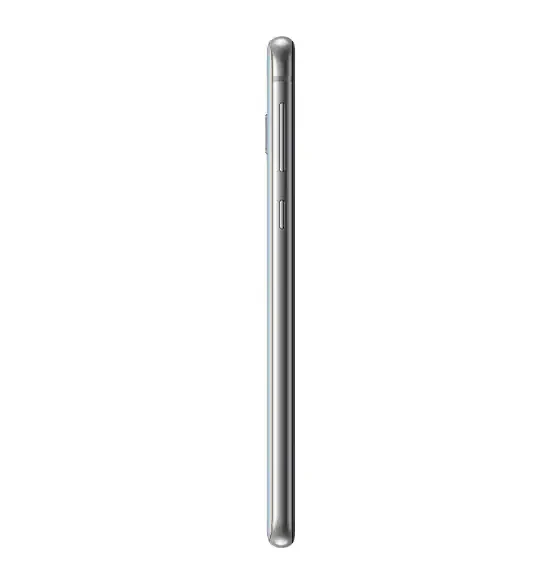
| Height | 149.9 mm |
| Width | 70.4 mm |
| Thickness | 7.8 mm |
| Weight | 157 grams |
| Waterproof | |
| Colors | Prism Blue, Prism Blue, Prism White, Prism Black, Prism Green |
Network
| Network | 2G, 3G, 4G |
| SIM Slot | Dual SIM, GSM+GSM |
| SIM Size | SIM1: Nano, SIM2: Nano |
Connectivity
| Bluetooth Bluetooth is a wireless communications technology for exchanging data between mobile phones, headsets, computers and other network devices over short distances without wires, Bluetooth technology was primarily designed to support simple wireless networking of personal consumer devices. | v5.0 |
| Wi-fi Wi-Fi is a popular wireless networking technology using radio waves to provide high-speed network connections that allows devices to communicate without cords or cables, Wi-Fi is increasingly becoming the preferred mode of internet connectivity all over the world. | Wi-Fi 6 |
| LAN | (802.11 a/b/g/n/ac/ax) 5GHz, MIMO |
| Wi-fi Hotspot | Yes |
| EDGE EDGE (Enhanced Data GSM Environment) is a wireless network technology generally considered the next step in the 2G network offers data transfer rates up to four times faster than ordinary GSM networks, Generally, EDGE is used for the purpose of wireless data transfer, such as sharing pictures and videos or browsing the Internet via a mobile phone connection. | Yes |
| GPRS GPRS (General Packet Radio Service) is a packet oriented mobile data service on the 2G and 3G cellular communication system's global system for mobile communications (GSM), Generally, GPRS is used for the purpose of wireless data transfer, such as sharing pictures and videos or browsing the Internet via a mobile phone connection. | Available |
| USB | Mass storage device, USB charging |
| GPS GPS The Global Positioning System is a satellite-based radio navigation system, GPS permits users to determine their position, velocity and the time 24 hours a day, in all weather, anywhere in the world, In order to locate your position, your device or GPS receiver must have a clear view of the sky. | Available |
| NFC NFC (Near field communication) is a set of standards for smartphones and similar devices to establish peer-to-peer radio communications with each other by touching them together or bringing them into proximity, usually no more than a few inches. | Yes |
Made By
| Country | South Korea |
Samsung Galaxy S10
The Galaxy S10 series is the tenth generation of the Galaxy S series. It began shipping in most international markets such as Bangladesh in March 2019. The Samsung Galaxy S10 offers a premium range of features that cater to tech-experience users. There’s little to separate the S10 from the S10+. It comes with chipset update and it’s top quality silicon Exynos.
Hardware & Software
Galaxy S10 is powered by Samsung Exynos 9820 Chipset and Mali-G76 MP12 GPU. It has Octa-Core (2.73 GHz, Dual core, M4 Mongoose + 2.31 GHz, Dual core, Cortex A75 + 1.95 GHz, Quad core, Cortex A55) Processor with 7nm Fabrication. It runs on Android 9.0 (Pie) with One UI 1.1. Samsung announce On 18 August 2020, that all variants of the S10 series would be supported for three generations of Android software updates. It can be upgradeable Android 12 with One UI 4.1. It also has Samsung Knox security platform, Game Launcher, Digital Wellbeing, and Gesture navigation. The 8GB RAM & 128GB/512GB internal storage are available on Galaxy S10.
Cameras
The Galaxy S10 highlights a 3-lens rear-facing camera setup. The camera is fantastic but still can’t rival the Pixel 3’s night shots. On the Galaxy S10 also added an ultra wide angle module to the back for a complete and versatile triple setup.
Rear Camera Setup (Triple Camera):
12 MP Wide-Angle Camera (Main)
- Aperture: Dual f/1.5 and f/2.4 (variable)
- OIS (Optical Image Stabilization)
- Dual Pixel Autofocus
- Ideal for most lighting conditions—bright or low light.
12 MP Telephoto Camera
- Aperture: f/2.4
- 2x Optical Zoom, up to 10x digital zoom
- Also supports OIS
- Great for portraits and zoomed-in shots without losing detail.
16 MP Ultra-Wide Camera
- Aperture: f/2.2
- 123° field of view
- Captures expansive landscapes, group shots, and architecture without distortion.
Front Camera (Selfie):
10 MP Dual Pixel Sensor
- Aperture: f/1.9
- Supports 4K UHD video recording
- Autofocus – rare among front cameras even today
- Produces sharp, detailed selfies and video calls.
Video Capabilities:
- Rear Video: Up to 4K at 60fps, HDR10+ recording, Super Slow-Mo (960fps at 720p)
- Front Video: Up to 4K at 30fps
- Advanced video stabilization and tracking autofocus
- Super Steady Mode available for smoother handheld shots
Battery
It has a 3400mAh cell inside, which lasts long enough for you. It’s still a lot if you look at competitors like the iPhone XS (2658mAh) and the OnePlus 7 Pro (2658mAh). It works 11 hours in Wi-Fi web browsing , and a few minutes short of 15 hours in video playback.
Key Battery Features:
- Fast Charging: Supports 15W wired fast charging via USB Type-C.
- Wireless Charging: Supports 15W fast wireless charging, making it convenient for cable-free use.
- Reverse Wireless Charging: You can charge other Qi-compatible devices like earbuds or smartphones.
Battery Management:
- Includes Battery Saver Mode, App Power Monitoring, and Adaptive Battery to extend usage.
- Supports wireless charging pads and power banks for flexible charging options.
Color and Storage
There are four colors: Prism White, Prism Black, Prism Green, Prism Blue available in Bangladesh market. Galaxy S10 5G comes in the colors Crown Silver, Majestic Black, and Royal Gold. Galaxy S10 has two main internal storage variants: 128GB and 512GB, both paired with 8GB of RAM. It also supports microSD card. You can expandable it up to 1TB.
Pros and Cons
| ✅ Pros | ❌ Cons |
| Dynamic AMOLED display Wireless & reverse charging Good Performance Headphone Jack + microSD Slot | No more software updates No 5G support Weak Battery life |
Samsung Galaxy S10 vs iPhone XS vs OnePlus 7 Pro Comparision
| Key Features | Galaxy S10 | iPhone XS | OnePlus 7 Pro |
| Release Date | March 2019 | September 2018 | May 2019 |
| Processor | Exynos 9820 | Apple A12 Bionic | Snapdragon 855 |
| RAM | 8GB | 4GB | 6GB/8GB/12GB |
| OS | Android 9 `Pie’ | iOS 12 | iOS 12 |
| Battery Capacity | 3400 mAh | 2658 mAh | 2658 mAh |
| Water Resistance | IP68 | IP68 | No official rating |
| Main Camera | Triple (12+12+16 MP) | Dual (12+12 MP) | Triple (48+8+16 MP) |
| Front Camera | 10 MP | 7 MP | 16 MP |
Frequently Asked Questions
- Q: What processor does the Galaxy S10 use?
- Ans: Samsung Exynos 9820.
- Q: Does it support 5G?
- Ans: No, It does not support 5G.
- Q: What is the battery capacity?
- Ans: 3,400 mAh, with fast charging.
- Q: Which type of display panel and size is used in Samsung Galaxy S10?
- Ans: 6.1-inch Dynamic AMOLED display with a resolution of 1440 x 3040px.
- Q: Does it have a headphone jack?
- Ans: Yes, 3.5mm headphone jack.
Reviews
Disclaimer Note
More Products from Samsung

New Arrivals
-
 Samsung S25 Ultra Review
৳1,99,999 (12GB+256GB) Official, 2,24,999 (12GB+512GB) Official, 2,26,999 (12GB+1TB) Official
Samsung S25 Ultra Review
৳1,99,999 (12GB+256GB) Official, 2,24,999 (12GB+512GB) Official, 2,26,999 (12GB+1TB) Official
-
 Vivo X Fold 5
৳: 139,500 (12GB+256GB), 149,500 (12GB+512GB) Unofficial
Vivo X Fold 5
৳: 139,500 (12GB+256GB), 149,500 (12GB+512GB) Unofficial
-
 Realme GT 7 5G
৳: 76,000 (12GB+512GB) Unofficial
Realme GT 7 5G
৳: 76,000 (12GB+512GB) Unofficial
-
 Infinix Hot 60 Pro Plus
৳: 21,990 (8GB+128GB) Official, 23,990 (8GB+256GB) Official
Infinix Hot 60 Pro Plus
৳: 21,990 (8GB+128GB) Official, 23,990 (8GB+256GB) Official
-
 Samsung Galaxy Z Flip7
৳: 109,999 (12GB+256GB), 119,999 (12GB+512GB) Unofficial
Samsung Galaxy Z Flip7
৳: 109,999 (12GB+256GB), 119,999 (12GB+512GB) Unofficial
-
 Samsung Galaxy Z Flip7 FE
৳: 135,999 (8GB+128GB), 142,999 (8GB+256GB) Unofficial
Samsung Galaxy Z Flip7 FE
৳: 135,999 (8GB+128GB), 142,999 (8GB+256GB) Unofficial
Top Rated
-
 Apple iPhone 16e
৳: 1,04,990 (8GB+128GB) Official, 94,990 (8GB+256GB) Unofficial
Apple iPhone 16e
৳: 1,04,990 (8GB+128GB) Official, 94,990 (8GB+256GB) Unofficial
-
 Samsung Galaxy A52
৳: 39,999 (Official)
Samsung Galaxy A52
৳: 39,999 (Official)
-
 Samsung Galaxy S23 FE
৳: 93,999
Samsung Galaxy S23 FE
৳: 93,999
-
 Dell Inspiron 3530 Core i3 13th Gen Laptop
৳64,500
Dell Inspiron 3530 Core i3 13th Gen Laptop
৳64,500
-
 Vivo V50 Lite
৳: 29,999 (Official)
Vivo V50 Lite
৳: 29,999 (Official)
-
Vivo X Fold 5
৳: 139,500 (12GB+256GB), 149,500 (12GB+512GB) Unofficial